Journal
How Do You Keep Food Hot and Cold at an Outdoor Event?
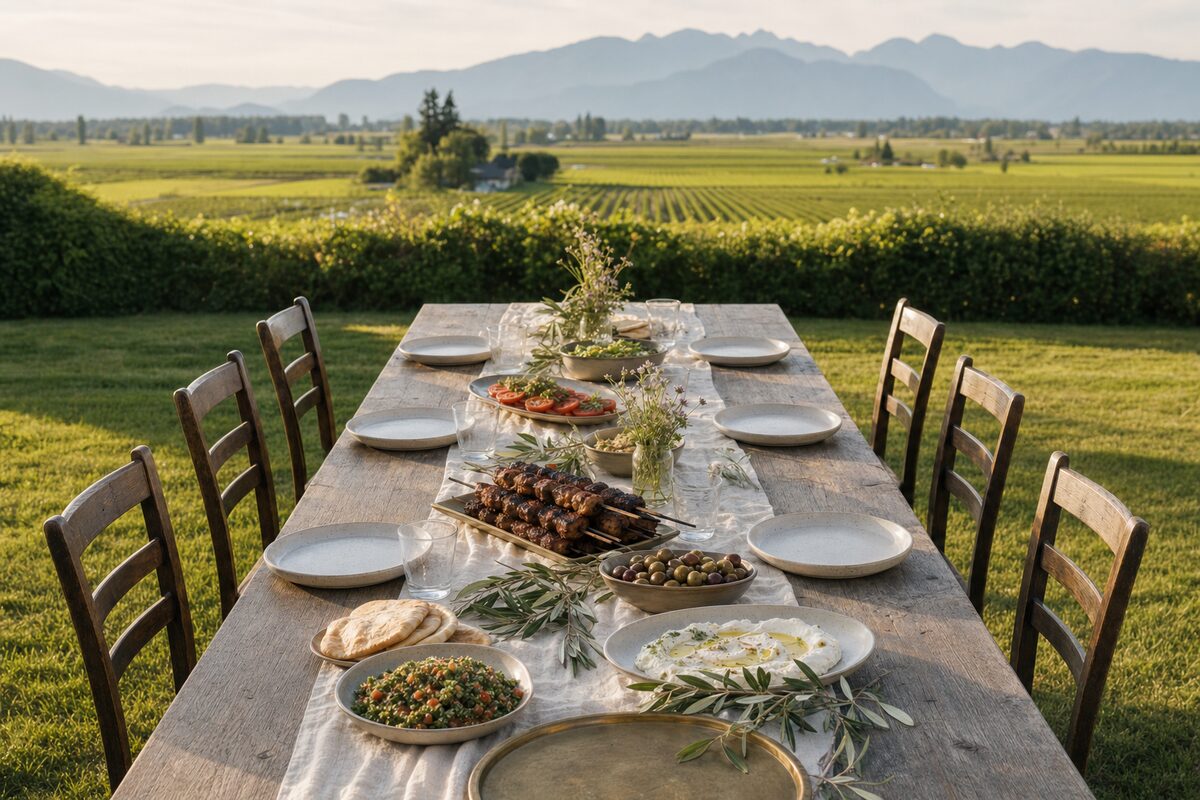
Hold hot dishes at 60°C (140°F) or above and cold dishes at 4°C (40°F) or below, which are the two numbers written into BC’s own food premises rules. Anything sitting between those temperatures is on a two hour clock, cut to one hour on a hot day. Chafing dishes, ice baths and serving in waves are what buy you time.
This guide covers the temperatures to hold, how long an outdoor table really has, the equipment that works in a park or a hall, and what to throw out at the end of the night.
What temperatures do you need to hold?
Two numbers, and they are not arbitrary. BCCDC’s guideline on holding food at ambient temperatures quotes the BC Food Premises Regulation word for word: “Every operator of food premises must ensure that potentially hazardous food is stored or displayed at a temperature of not more than 4°C or not less than 60°C.”
That is the legal standard for licensed kitchens in British Columbia, and it is also the most useful thing a host can borrow. Everything between 4°C (40°F) and 60°C (140°F) is what Health Canada calls the temperature danger zone, where harmful bacteria multiply quickly. Health Canada’s own phrasing is that bacteria can grow in as little as two hours in that range.
Fraser Health gives a host the same pair of numbers in plain language in its potluck food safety bulletin: hold hot perishable foods at 60°C/140°F or higher, and hold cold perishable foods at 4°C/40°F or lower. Anything you reheat on site should reach 74°C (165°F) within two hours, and that is also the temperature Health Canada sets for reheated leftovers.
The reason this is worth taking seriously at a family event rather than only in a restaurant: the Public Health Agency of Canada estimates about 4 million Canadians, roughly 1 in 8, get a food-borne illness each year, leading to about 11,600 hospitalizations. Outdoor gatherings are where several of the usual protections fall away at once.
How long can food sit out at a Fraser Valley summer event?
Two hours, and one hour when it is genuinely hot. Health Canada’s summer food safety guidance is direct: do not keep food at room temperature for more than one hour on hot summer days. Its general rule for the rest of the year is two hours, after which cooked food should be thrown away.
The US Food and Drug Administration attaches a number to “hot” in its outdoor food safety guidance: above 90°F, which is 32°C, the two hour allowance becomes one hour. On a July afternoon in Abbotsford, Chilliwack or Langley, a table in the sun clears that threshold long before the air does, which is worth remembering when you choose where to put the food.
British Columbia has one more figure worth knowing, though it applies to licensed premises rather than to your backyard. BCCDC allows an operator with an approved food safety plan to use time alone as a control for up to four hours, but only at ambient temperatures of 24°C or less. Above 24°C, BCCDC says the danger zone standard applies instead, meaning two hours or less, and food left out for four hours or longer must be discarded. The direction of travel is the useful part: the warmer the day, the shorter the allowance, in every set of rules that exists.
For planning, that means a long outdoor event does not get one clock. Each tray gets its own, starting when it leaves temperature control.
How do you hold hot food at 60°C in a park or a hall?
With equipment that adds heat, not equipment that merely slows heat loss, and with a thermometer to prove it is working. This is the point where outdoor events go wrong most often, because indoor assumptions do not survive open air.
Chafing dishes with a water pan underneath are the standard answer, and the water pan is the part that matters: it spreads heat evenly and stops the food scorching where the flame sits. Insulated carriers and hot boxes hold food that went in hot, but they do not raise a temperature that has already fallen. Health Canada’s barbecue guidance makes the same distinction for the grill itself, suggesting cooked meats be kept hot at the side of the grill rather than over the coals where they overcook.
Wind is the outdoor variable nobody plans for. An open chafing pan in a breeze loses heat far faster than the same pan indoors, so lids matter, and so does putting the serving line somewhere sheltered. Deep trays hold heat better than shallow ones, which is the exact opposite of what you want when you are cooling food down afterwards.
Then check it. Fraser Health advises using a sanitised probe thermometer to measure internal temperatures, and Fraser Health also notes that you cannot judge food by colour or by touch, observing that only 20 per cent of Lower Mainland residents even use a fridge thermometer at home. One probe reading partway through service tells you more than an hour of watching steam.
How do you keep cold dishes cold on an open table?
Put them on ice, put them in shade, and put out less than you think. A bowl of salad sitting on a table in the sun is in the danger zone within minutes, regardless of how cold it was when it left the cooler.
The method that works is nesting: set the serving bowl inside a larger bowl, tray or tub filled with ice, so the cold is touching the container rather than sitting near it. Shade helps more than most people expect. And Health Canada’s cooler advice applies to the reserve supply: keep the cooler out of direct sunlight, avoid opening it too often since that lets cold air out and warm air in, and use a separate cooler for drinks so the food cooler stays shut.
This matters more for a Middle Eastern spread than for many others, because the cold half of the table is not a garnish. Dips, salads, pickles and bread are most of the meal, which our guide to what mezze is and how to order it sets out in more detail. Plan cold holding with the same seriousness you would give the grill.
What holds what, and for how long?
Every method does one job. Confusing “keeps hot food hot” with “makes cool food safe” is the mistake that ruins an otherwise careful setup.
| Method | What it does | What it does not do | Watch out for |
|---|---|---|---|
| Chafing dish with water pan | Holds food at 60°C or above through service | Bring cool food back up to a safe temperature | Wind, an empty water pan, a flame that has gone out |
| Insulated carrier or hot box | Slows heat loss on food that went in hot | Add any heat at all | Half empty carriers lose heat fast |
| Household warming tray | Keeps a dish warm indoors | Reliably hold 60°C outdoors in a breeze | Uneven heat across the surface |
| Cooler with ice packs | Holds food at or below 4°C | Chill food that is already warm, quickly | Frequent opening, direct sun, melt water contact |
| Serving bowl nested in ice | Holds a cold dish cold on the table | Work without shade, or with a shallow ice bed | Ice melting away unnoticed |
| Bare table in shade | Nothing, in food safety terms | Stop the two hour clock | This is the clock, running |
The only reading that settles any row of that table is a probe thermometer in the thickest part of the food. Equipment tells you what should be happening. A thermometer tells you what is.
Should you put all the food out at once?
No, and this is the single most effective habit at a long event. Serving in waves keeps each tray’s clock short, so no single dish spends the whole afternoon out.
- Put out roughly half of each dish. Hold the rest in the cooler or the hot carrier, still under temperature control.
- Refill with fresh trays rather than topping up old ones. Adding cold food to a tray that has been out for ninety minutes gives the whole tray the older tray’s clock.
- Swap the tray, not the contents. A clean tray each time also solves the serving utensil question, and Fraser Health advises a separate utensil for each dish to prevent cross contamination.
- Keep dishes covered between waves. Fraser Health recommends keeping foods covered as much as possible.
- Note the time each tray goes out. Two hours is easy to track and impossible to remember.
- Feed the cold things earlier. Salads and dressed dishes lose their texture on a warm table long before anything else does.
If you are working out how much to put out in the first wave, our guides to how much Middle Eastern food you need per person and catering for 20, 50 or 100 guests give the quantities, and how to transport catered food safely covers getting it all there in the first place.
What should you throw out at the end?
Anything that spent more than two hours in the danger zone, or more than one hour on a hot day. Health Canada’s wording is to throw the food away, not to refrigerate it and reuse it later, because chilling does not undo what happened while it was warm.
Two more limits that catch people out at the end of an event. Health Canada says to discard uneaten leftovers after they have been reheated, so a tray that was warmed on site and only half eaten should not go home for tomorrow. And Health Canada is clear that you cannot tell if food is contaminated by its look, smell or taste, so a confident sniff is not evidence.
Whatever did stay under control the whole time is genuinely worth keeping, and a Middle Eastern spread is unusually good the next day. Cool it fast in shallow containers and follow the day counts in our guide to how long Middle Eastern leftovers keep and how to store them.
Planning an outdoor event in the Fraser Valley is mostly a question of timing, shade and equipment, and it is much easier when the kitchen knows what you are walking into. Have a look at the menu and the places we drive to, including Aldergrove and the parks between here and Langley, then call us at (819) 743-5953 with your date, your venue and roughly when you want to eat.
Frequently asked questions
What temperature does hot food need to be held at outdoors?
60°C (140°F) or higher. The BC Food Premises Regulation, quoted by the BC Centre for Disease Control, requires potentially hazardous food to be held at not more than 4°C or not less than 60°C. Fraser Health gives the same 60°C figure for holding hot perishable food at a potluck.
How long can food sit out at a summer event?
Two hours at room temperature, and one hour on hot summer days, according to Health Canada. The US Food and Drug Administration sets that hot day threshold at 90°F, which is 32°C. After that, Health Canada's instruction is to throw the food away rather than refrigerate it and reuse it.
Do chafing dishes actually keep food safe?
They hold hot food hot, which is their job, but they will not bring cool food back up to a safe temperature. Food should go into a chafing dish already at 60°C or above. A probe thermometer is the only way to know whether the dish is holding that, especially outdoors where wind pulls heat off the pans.
How do you keep salads and dips cold at an outdoor table?
Nest the serving bowl inside a larger bowl or tray of ice, keep it in shade, and refill it in small batches from a cooler rather than putting everything out at once. Health Canada advises keeping coolers out of direct sunlight and opening them as little as possible, and Fraser Health puts the cold holding target at 4°C or lower.
Can you put leftovers back in the fridge after an outdoor event?
Only if they stayed out of the danger zone. Health Canada says to throw away cooked food left at room temperature for more than two hours, or one hour on a hot day, and Fraser Health counts preparation and travel time inside that. Food held properly hot or cold the whole time is a different situation.
Is a warming tray enough to hold food at an outdoor event?
Usually not on its own. Household warming trays are built for indoor conditions and are easily beaten by wind and open air. Whatever equipment you use, the test is the same: a probe thermometer reading 60°C or higher in the thickest part of the food, checked more than once during the event.
Salma’s Kitchen cooks Armenian and Middle Eastern food in Abbotsford, BC. See the menu, our catering service areas, or how to order. Phone only: (819) 743-5953.