Journal
How Do You Reheat Kabab and Rice Without Drying It Out?
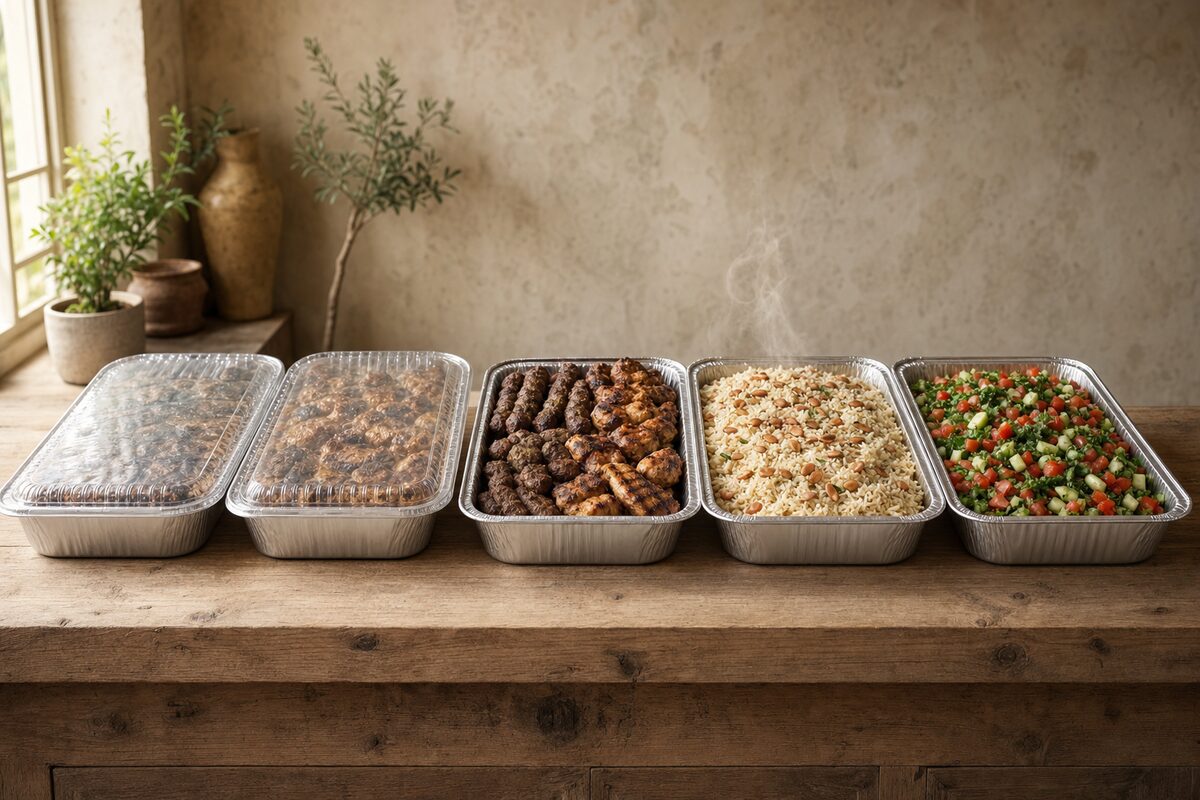
Reheat leftovers to an internal temperature of 74°C (165°F), which is what Health Canada requires, and add moisture and a lid so the heat arrives as steam rather than dry air. Grilled meats do best covered in a hot oven for a short time. Rice reheats best with a splash of water and a tight lid.
This guide covers the one temperature that matters, the method for each kind of dish, and the one situation where reheating does not rescue food no matter how carefully you do it.
What temperature do leftovers need to reach?
74°C (165°F), measured in the middle with a digital food thermometer. Health Canada lists it plainly in its cooking temperatures chart, where “Leftovers” gets its own row at 74°C, the same figure it gives for chicken pieces and for ground poultry.
There are two useful things hiding in that chart. The first is that leftovers have a single number regardless of what they were originally. A piece of beef you cooked to a medium 71°C the first time still needs 74°C the second time. The second is that liquids get a different instruction: Health Canada’s guidance on leftovers says to bring gravies, soups and sauces to a full, rolling boil and stir during the process, rather than aiming at a thermometer reading.
Guessing does not work here, and that is not a scolding, it is a measurement problem. Fraser Health points out that you cannot tell if meat is cooked by its colour and notes that only 20 per cent of Lower Mainland residents use a fridge thermometer. A digital probe removes the guesswork in a few seconds.
Foodborne illness is not rare enough to shrug at either. The Public Health Agency of Canada estimates that about 4 million Canadians, roughly 1 in 8, get a food-borne illness every year, with about 11,600 hospitalizations.
Why does reheated kabab go dry, and how do you stop it?
Because dry heat removes water from the outside faster than it warms the centre. Grilled meat is already cooked, so the job is not to cook it again but to carry the middle up to 74°C in as few minutes as possible while losing as little moisture as you can.
Three things do most of the work. Cover the dish, so the water leaving the meat turns into steam that stays with it instead of drifting off into the oven. Add a spoonful or two of water, stock or the sauce the dish came with, under that cover. And use a moderate oven rather than a fierce one, because a hot oven browns and dries the surface long before the centre catches up.
Minced and skewered meats suffer most, and there is a reason for that shape. Kabab is ground meat pressed around a flat skewer and cooked fast over live coals, as our guide to how Middle Eastern skewers are grilled over charcoal describes. All that surface area is what makes it delicious on day one and fragile on day two. Chicken behaves a little better, which is one of several practical differences between shish tawook and kabab.
A note on the grill, since people ask: putting leftover skewers back over live fire is the fastest way to turn them into jerky. The meat is already cooked through, so there is nothing left for high heat to do except drive out water.
How do you reheat rice without it going hard?
Add liquid and trap it. Refrigerated rice goes firm because the starch recrystallises as it cools, and steam is what reverses that. Roughly a tablespoon of water for each cup of rice, a tight lid or a well sealed cover, and gentle heat will bring it back close to how it started.
The safety half of the rice question is more important than the texture half, and it is the part most reheating articles skip. The BC Centre for Disease Control notes that Bacillus cereus spores are resistant to heat and survive normal cooking, then germinate and multiply when food sits between 8°C and 55°C for long enough. The illness this causes is, in BCCDC’s words, “frequently associated with starchy food such as pasta or rice dishes”.
BCCDC’s prevention advice is specific and worth following exactly: keep food either above 60°C or refrigerated below 4°C, cool cooked food that will not be eaten right away to below 4°C within 6 hours, and reheat to at least 74°C. Rice that went straight from the pot into a shallow container and into the fridge reheats fine. Rice that sat out on the counter all afternoon is a different food.
Which method suits which dish?
Match the method to the shape of the food. Dense things want gentle covered heat, crisp things want dry heat, and anything with a sauce wants a lid. The internal temperature target is the same for all of them.
| Dish type | Best method | Practical setting | Aim for |
|---|---|---|---|
| Grilled skewered meats, kabab, chicken | Covered in the oven with a splash of liquid | Moderate oven, roughly 150°C to 160°C | 74°C in the thickest piece |
| Rice and grain dishes | Covered pan or microwave, water added | Low heat, lid on, stir once | 74°C throughout, steam visible |
| Stuffed or crisp items such as kibbe or toshka | Uncovered in the oven or an air fryer | Moderate to hot oven, no cover | 74°C inside, surface crisp again |
| Stews, soups, sauces and gravies | Saucepan on the stove, stirred | Medium heat | A full rolling boil |
| Cooked vegetables | Covered pan or microwave, short bursts | Low to medium | 74°C, stopping before they collapse |
| Bread and flatbread | Wrapped in foil in the oven, or a dry pan | Moderate oven, a minute or two | Warm and pliable, not crisp |
The settings and times in that table are cooking judgment and will shift with portion size, oven and container. The 74°C column is not judgment. It comes from Health Canada’s chart, and a thermometer is the only thing that confirms it.
Why can reheating not fix food that sat out too long?
Because heat kills bacteria but does not always destroy what bacteria leave behind. This is the single most useful thing to understand about leftovers, and it explains why the two hour rule is a rule rather than a suggestion.
BCCDC describes the emetic toxin produced by Bacillus cereus this way: it “is produced in the food and is resistant to heat; therefore it will not be eliminated by most cooking methods, even when the vegetative cells are inactivated”. Translated into kitchen terms: you can reheat a tray of rice to a perfect 74°C, kill every living bacterium in it, and still have a toxin sitting there that makes people ill.
So the clock is what protects you, not the oven. Health Canada’s instruction is blunt: throw away any cooked food left out at room temperature for more than two hours, and on hot summer days do not keep food at room temperature for more than one hour. Fraser Health adds a detail people usually forget when counting: the two hours include preparation time, travel time and time on the table, not just the minutes since the lid came off.
Can you reheat the same leftovers twice?
No. Health Canada’s leftovers guidance says to discard uneaten leftovers after they have been reheated, which rules out the common habit of warming a whole container, eating half, and putting the rest back.
The workaround is simple and costs nothing:
- Portion before you chill, not after. Divide leftovers into meal sized containers while they are still going into the fridge.
- Cool them properly first. Health Canada advises refrigerating leftovers in uncovered, shallow containers so they cool quickly, and putting the lid on once the food has cooled to refrigeration temperature.
- Reheat only what you will eat. One container, one reheat, one meal.
- Keep the rest cold. Food that never got warmed is still on its original clock.
- Date the containers. Health Canada recommends this specifically, and it removes the guesswork that leads to “it is probably fine”.
- Do not judge by smell. Health Canada’s line is worth memorising: you cannot tell if food is contaminated by its look, smell or taste.
If you want the full picture on how many days you actually have, see our guide to how long Middle Eastern leftovers keep and how to store them.
What about dips, bread and salads?
Most of them should not be reheated at all, which is one of the quiet advantages of a Middle Eastern spread. Hummus, baba ganoush and muhammara are served at room temperature or cold by design, so they come out of the fridge, sit for twenty minutes and go on the table.
Bread is a reheating job rather than a cooking job. Wrapped in foil in a moderate oven for a minute or two, or passed over a dry pan, flatbread goes soft and pliable again. Left uncovered in a hot oven it turns into a cracker. Different breads behave differently here, as our guide to pita, lavash, markook and manakish explains.
Fresh salads such as tabouli and fattoush do not reheat and should not be frozen. They are the part of the spread that has to be eaten on its own schedule, and the dressing keeps working on them in the fridge regardless.
The general shape of it: the grilled meats and rice want careful heat, the dips want nothing at all, the bread wants thirty seconds, and the salads want to be eaten first. That is a rather forgiving set of leftovers compared to most cuisines.
Ordering ahead and planning for a second meal is a normal way to eat this food. Have a look at the menu, then call us at (819) 743-5953 and ask about your specific order if you want to know how something is best held or warmed the next day.
Frequently asked questions
What temperature should leftovers be reheated to?
Health Canada gives one number for all leftovers: reheat to a safe internal temperature of 74°C (165°F), checked with a digital food thermometer. Gravies, soups and sauces should be brought to a full rolling boil instead. That number is about safety, not taste, so it applies whether you are using an oven, a pan or a microwave.
Why does reheated kabab always come out dry?
Because dry heat pulls moisture out faster than it warms the middle. Grilled meat is already cooked, so it does not need long exposure, only enough time to reach 74°C in the centre. Covering it, adding a spoonful of water or stock under the cover, and using a moderate oven rather than a hot one all shorten the dry time.
Can you reheat rice safely?
Yes, if the rice was cooled and refrigerated quickly after cooking. The BC Centre for Disease Control advises cooling cooked food that will not be eaten right away to below 4°C within 6 hours, keeping it above 60°C or below 4°C in the meantime, and reheating to at least 74°C. Rice left at room temperature for hours is the case where reheating does not make it safe.
Is it safe to reheat leftovers more than once?
Health Canada is direct about this: discard uneaten leftovers after they have been reheated. The practical fix is to reheat only the portion you plan to eat and leave the rest cold in the fridge, so the same food is not warmed, cooled and warmed again.
Is the microwave or the oven better for reheating grilled meat?
The oven, for anything you want to stay tender, because it heats more evenly and lets you trap steam under a cover. The microwave is faster and perfectly safe as long as you cover the food, stop halfway to stir or turn it, and confirm 74°C at the end. Health Canada specifically recommends stopping midway and stirring so the heat spreads evenly.
How long do leftovers keep before reheating is beside the point?
Health Canada advises eating refrigerated leftovers within 2 to 3 days or freezing them, and its storage table allows 3 to 4 days for cooked meat, stews and vegetable dishes. Anything left at room temperature for more than two hours should be thrown out rather than reheated.
Salma’s Kitchen cooks Armenian and Middle Eastern food in Abbotsford, BC. See the menu, our catering service areas, or how to order. Phone only: (819) 743-5953.