Journal
Allergens in Middle Eastern Food: What to Check
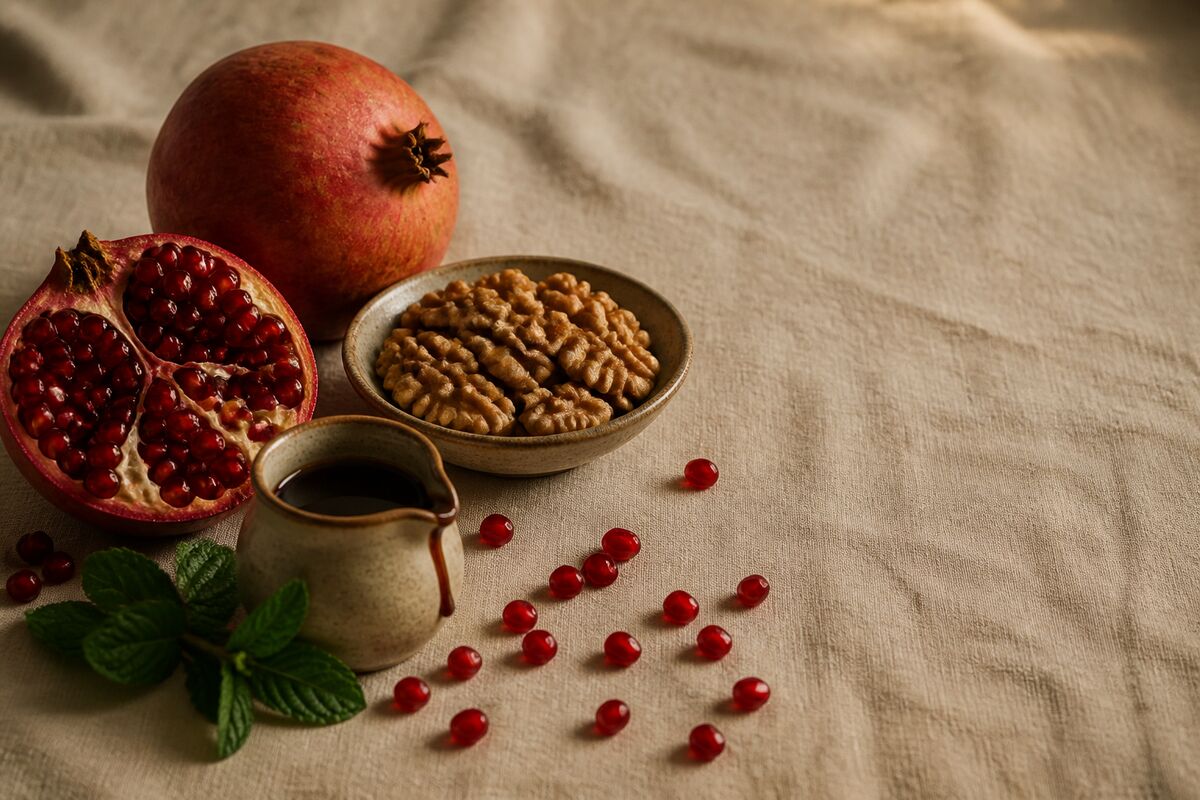
The three to watch in Middle Eastern cooking are sesame, which is what tahini is made from, tree nuts such as walnuts and pistachios in dips and pastries, and dairy in yogurt sauces, ghee and cheese. All three are Health Canada priority allergens, and a restaurant plate carries no ingredient label.
This guide describes where each one typically appears across the cuisine, so you know what to ask about. It is not a statement about any one kitchen’s recipes or its cross-contact controls, and it is not medical advice. If you have a diagnosed allergy, your allergist’s guidance outranks anything on this page.
Which priority allergens turn up most in Middle Eastern cooking?
Sesame, tree nuts, dairy and wheat, in roughly that order of “people did not expect that”. Health Canada’s list of priority food allergens covers the foods most frequently linked to serious allergic reactions in Canada, and four of them are structural to this cuisine rather than incidental.
For scale: Health Canada’s research summary on the prevalence of food allergies reports that 6.1 percent of Canadians had a probable food allergy in 2016, while 9.3 percent perceived themselves to have one. At a table of twenty, the question comes up.
| Allergen | Where it typically appears in this cuisine | Other names to watch for |
|---|---|---|
| Sesame | Tahini, and therefore hummus, baba ganoush and tahini sauces; za’atar blends; bread toppings; halva | Tahini, tahina, benne, gingelly, til, sesamol |
| Tree nuts | Muhammara, baklava, maamoul, rice garnishes, some stuffed dishes | Pine nuts count as a tree nut in Canada |
| Milk | Yogurt marinades, garlic and yogurt sauces, labneh, ayran, butter and ghee, knafeh cheese | Casein, caseinate, whey, ghee, butter fat |
| Wheat | Bread, bulgur in tabbouleh and kibbe, phyllo pastry, some marinades, vermicelli in rice | Bulgur, semolina, durum, couscous, farina |
| Eggs | Some pastries, some batters and binders | Albumin, ovalbumin, lysozyme |
| Mustard | Some pickles, dressings and spice blends | Mustard flour, mustard seed |
Wheat has its own guide, since gluten is a slightly different question from allergy: see which Middle Eastern dishes are gluten free.
Where does sesame hide?
Everywhere tahini goes, which is further than most people realise. Sesame is a priority allergen in Canada, and in Middle Eastern cooking it is not a garnish, it is a base ingredient.
Health Canada’s guidance sheet on sesame as a priority food allergen is unusually specific about this cuisine. It lists tahini and tahina among the other names sesame appears under. It names hummus directly as a food that contains or often contains sesame. And it lists shish kebabs among the “combination foods” where sesame turns up, because marinades and spice rubs can carry it.
Beyond the dips, the places to ask about:
- Tahini sauce, served with grilled meats and wraps in many kitchens.
- Za’atar, the herb blend, which traditionally includes toasted sesame seeds.
- Bread toppings, since sesame is a classic finish on flatbreads and rings.
- Halva, which is a sesame confection by definition.
- Sesame oil and gomasio, listed by Health Canada as sesame containing.
That guidance also gives the two rules that matter when you eat out: if you are not sure whether something contains sesame, do not eat it, and avoid products that do not come with an ingredient list. A restaurant plate is by definition a food without an ingredient list, which is why the question has to be asked out loud. Our comparison of hummus, baba ganoush and muhammara explains which dips are traditionally built on tahini and which are not.
Where do tree nuts show up?
In the dips, the rice and almost every dessert. Muhammara is the one people miss in a savoury course, because a red pepper dip does not look like a nut dish.
Health Canada’s tree nuts guidance defines the group as almonds, Brazil nuts, cashews, hazelnuts, macadamia nuts, pecans, pine nuts, pistachio nuts and walnuts. Pine nuts are the one that surprises people, and pine nuts are scattered over rice, stuffed vegetables and meat dishes throughout this cuisine. The same page flags baked goods, nut based spreads and vegetarian dishes as common sources.
Across Middle Eastern cooking, the usual nut carriers are:
- Muhammara, traditionally made with walnuts, as we describe in what muhammara is.
- Baklava, layered with pistachios, walnuts or almonds depending on region.
- Maamoul, filled with walnuts, pistachios or dates.
- Rice dishes finished with toasted almonds or pine nuts.
- Stuffed vegetables and meat mixes, where pine nuts are a classic addition.
- Nut based sweets and drinks, including some milk puddings.
Our guide to baklava, maamoul, knafeh and halva covers the dessert side in more detail. A peanut is legally a legume rather than a tree nut, but it is a separate priority allergen in its own right, so name both if both apply to you.
Where is the dairy?
In the marinade, the sauce, the drink and the pastry, which is to say in places a menu description will not always mention.
Health Canada’s milk guidance lists butter, buttermilk, cheese, cream, ghee and butter fat, kefir, sour cream and yogurt among the common sources of milk, and casein, caseinate, whey and lactalbumin among the other names it appears under on a label. Ghee is the one to underline for this cuisine: clarified butter is a traditional cooking fat for rice, pastry and stews.
In Middle Eastern cooking, dairy typically appears in:
- Yogurt marinades for chicken, which is how a great deal of grilled chicken is tenderised.
- Yogurt and garlic sauces served alongside grilled meats.
- Labneh, strained yogurt served as a dip.
- Ayran, the salted yogurt drink, covered in our post on ayran, hibiscus tea and lemonada.
- Butter or ghee in rice, pastry and some meat dishes.
- Cheese, including the melting cheese inside knafeh and the brined cheeses on a breakfast table.
Lactose intolerance and a milk allergy are not the same thing, and the amount that matters is different for each. That distinction belongs with your health care provider, not with a kitchen.
Why is the restaurant answer different from the grocery store answer?
Because the labelling rules Canadians rely on were written for packaged food, and a plate of food is not packaged food.
The Canadian Food Inspection Agency’s consumer guidance is clear that prepackaged food labels must identify priority allergens and gluten sources, either in the ingredient list or in a “Contains” statement. It also explains that a “may contain” precautionary statement is used where an allergen might be present despite reasonable measures to prevent cross-contamination, and that such statements are not a substitute for good manufacturing practice.
None of that machinery exists behind a restaurant counter. There is no panel to read and no recall notice to subscribe to. The ingredient list is a person, and you get it by asking.
Cross-contamination is the part people forget
This is the most important paragraph on this page. Cross-contamination, or cross contact, is the accidental transfer of an allergen into a food that does not normally contain it, and in a small shared kitchen it is a real and ordinary risk, not a theoretical one.
Consider what is shared in any Middle Eastern kitchen: one grill that also warms flatbread, one fryer, one set of tongs, one board, one knife, one counter where bread is torn, and serving spoons that move between dips. A dish can be built entirely from ingredients you tolerate and still pick up traces of something you do not.
So if your allergy is serious, do not rely on an article, a menu symbol or a reassuring answer from a website. Speak to the kitchen directly about your specific allergy and your specific order, ask what shares equipment with what, and take a cautious answer seriously. Health Canada notes there is currently no cure for food allergies and that the only way to manage the risk is complete avoidance of the allergen, so a kitchen that tells you it cannot be certain is giving you useful information, not bad service.
What to say when you call
Five things, in this order. It takes under a minute and it is far better than arriving and hoping.
- Name the allergen plainly, and say whether the reaction is severe.
- Ask about a specific dish, not the menu as a whole.
- Ask what is in the marinade, the sauce and the garnish, not just the main ingredient.
- Ask what shares the grill, the fryer and the serving utensils.
- Ask whether the kitchen is comfortable taking the order, and let it say no.
Do it when you book rather than on the day, especially for a gathering. Our guide to halal, vegetarian and dietary catering covers how to plan an event around several needs at once.
Salma’s Kitchen cooks Armenian and Middle Eastern food in Abbotsford, BC, and caters events across the Fraser Valley and Metro Vancouver. See the menu, then call (819) 743-5953 and tell us what you need to avoid. We will tell you what goes into the dish you are asking about and where we cannot be certain, because on this subject a guess is worse than no answer at all.
Frequently asked questions
Does hummus contain sesame?
Traditional hummus contains tahini, and tahini is sesame paste. Health Canada's own priority allergen guidance lists tahini among the other names sesame travels under, and names hummus as a food that contains or often contains sesame. If you react to sesame, treat every tahini based dip as sesame until a kitchen tells you otherwise.
Which Middle Eastern dishes contain nuts?
Muhammara is traditionally built on walnuts, most pastries carry pistachios, walnuts or almonds, and rice dishes are often finished with toasted almonds or pine nuts. Health Canada counts pine nuts as a tree nut, which catches people out. Ask about the rice garnish as well as the obvious ones.
Is Middle Eastern food dairy free?
Large parts of the cuisine are built without dairy, but it appears in more places than the menu suggests: yogurt marinades, yogurt and garlic sauces, labneh, salted yogurt drinks, butter or ghee in rice and pastry, and the cheese inside knafeh. Health Canada lists ghee and butter fat among the common sources of milk.
Do restaurants have to list allergens in Canada?
The allergen labelling rules are written for prepackaged food. The Canadian Food Inspection Agency requires prepackaged labels to identify priority allergens and gluten sources, but a plate handed across a counter carries no label at all. That is why the phone call replaces the ingredient list when you eat out.
Can a small kitchen guarantee an allergen free meal?
Honestly, usually not. Shared grills, shared fryers, shared boards and the same serving spoons make cross-contact a real possibility even when every ingredient in a dish is clear. A kitchen can tell you what goes into a dish and where the risks are. Whether that is enough for your allergy is a decision only you and your allergist can make.
What should I say when I call about a food allergy?
Name the allergen, say how severe the reaction is, and ask about the specific dish rather than the menu in general. Then ask what shares the grill, the fryer and the serving utensils. Call Salma's Kitchen at (819) 743-5953 before you order, not when you arrive, so there is time to answer properly.
Salma’s Kitchen cooks Armenian and Middle Eastern food in Abbotsford, BC. See the menu, our catering service areas, or how to order. Phone only: (819) 743-5953.