Journal
Which Middle Eastern Dishes Are Gluten Free?
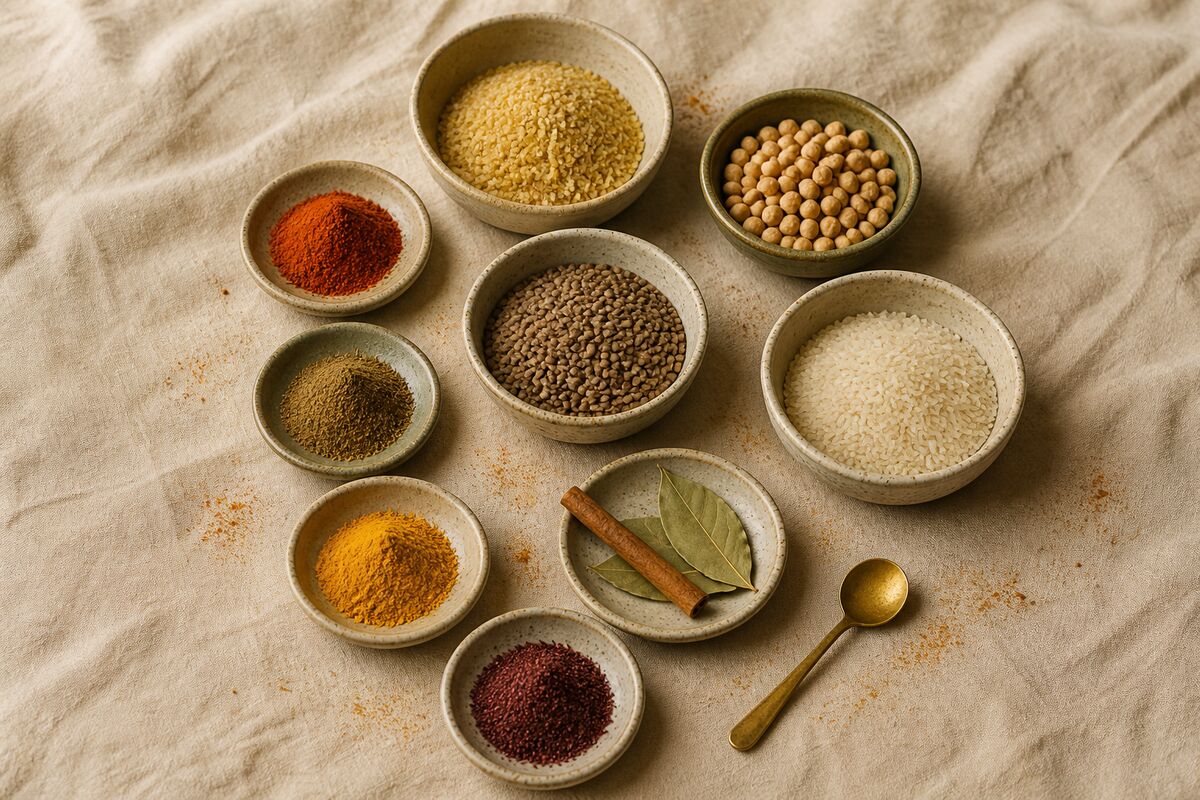
In Middle Eastern cooking, grilled meats, rice, most fresh salads and dips like hummus and baba ganoush are built from ingredients that contain no wheat, while bread, tabbouleh, kibbe and nearly every pastry contain it. Restaurant food carries no ingredient label, so ask the kitchen about your exact order.
This guide is about the cuisine, not about any one kitchen’s practice. It covers where wheat sits in traditional Middle Eastern dishes, the three places it hides where people never look, and the short list of questions worth asking before you order anywhere.
Which Middle Eastern dishes usually contain wheat?
More than you would guess, because wheat in this cuisine is not only bread. It is also a grain used inside salads and meat dishes, and a paste used to bind things together.
Health Canada’s priority allergen guidance for wheat and triticale is useful reading here, because it lists the other names wheat travels under on a label: bulgur, couscous, durum, semolina, farina, spelt, kamut and seitan among them. Three of those are staples of Middle Eastern cooking. The same page also names falafel as a food that contains or often contains wheat, which surprises most people, since falafel starts life as chickpeas or fava beans and picks up flour only as a binder in some recipes.
The usual wheat carriers in this cuisine:
- Breads. Pita, lavash, markook and manakish are wheat flour by definition. We wrote about the differences in the Middle Eastern breads guide.
- Bulgur dishes. Tabbouleh is a parsley salad built on cracked wheat, and kibbe is traditionally ground meat worked together with bulgur. Our explainer on kibbe describes how the bulgur does the binding.
- Fattoush, which is a salad defined by the toasted or fried bread in it.
- Pastries. Baklava is layered wheat phyllo, knafeh is usually built on shredded phyllo or semolina, and maamoul is a semolina and flour cookie.
- Anything battered, breaded or dusted before frying.
- Some sausages and meat mixes, where rusk or breadcrumb is used as a filler.
Which dishes are usually built without wheat?
The naturally wheat free half of the cuisine is large: grilled meat, rice, legumes, roasted vegetables, fresh herb salads and the tahini based dips. That is most of a mezze table before bread arrives.
The table below describes traditional recipes across the cuisine. It is not a statement about what any particular restaurant does, because recipes and suppliers vary from kitchen to kitchen.
| Dish | Wheat in the traditional recipe | What still needs checking |
|---|---|---|
| Hummus | No, it is chickpeas, tahini, lemon, garlic | The bread it is served with, and shared serving spoons |
| Baba ganoush | No, it is eggplant, tahini, lemon, garlic | Same as hummus, plus what it is scooped with |
| Muhammara | Usually yes, breadcrumbs are traditional | Whether that kitchen uses breadcrumbs at all |
| Grilled skewers | Usually no, meat and spices | The marinade, and what shares the grill |
| Rice | Rice is not wheat | Whether wheat vermicelli is toasted into it |
| Tabbouleh | Yes, bulgur is cracked wheat | Whether a bulgur free version exists |
| Fattoush | Yes, the fried bread is the point | Nothing, the bread is structural |
| Kibbe | Yes, bulgur | Nothing, it is part of the recipe |
| Armenian or chopped salad | No, vegetables and dressing | The dressing, and whether croutons are added |
| Baklava, knafeh, maamoul | Yes | Nothing, these are wheat pastries |
Our comparison of hummus, baba ganoush and muhammara and of tabouli, fattoush and Armenian salad goes further into what is in each one.
Where does gluten hide in Middle Eastern food?
Three places, and none of them is the bread basket, because everybody already sees the bread basket.
The rice. This is the one that catches people. In a great many Middle Eastern and Armenian kitchens, rice is started by toasting fine wheat vermicelli in butter or oil before the rice and water go in. It is a texture and colour step, not an ingredient anybody thinks to mention, and the noodles vanish into the finished dish. Ask about the rice specifically.
The marinade and the seasoning blend. Soy sauce and tamari appear on Health Canada’s list of foods that often contain wheat, and commercial spice blends can carry wheat as a carrier or anti-caking ingredient. A chicken skewer can be wheat free as meat and still not be wheat free as a marinated dish.
The shared equipment. A grill that also toasts flatbread, a fryer that also cooks a battered item, one board, one set of tongs. This is the part no ingredient list will ever show you.
Why can a kitchen not simply say a dish is gluten free?
Because “gluten free” is a regulated claim in Canada with a hard number behind it, and no busy shared kitchen can measure itself against that number in the middle of service.
Under section B.24.018 of the Food and Drug Regulations, any gluten present from cross-contamination in a food represented as gluten free must not surpass 20 parts per million, a level the Canadian Food Inspection Agency describes as protective for the majority of people with celiac disease. That standard was written for manufacturers with controlled production lines, not for a restaurant grill.
Two more distinctions matter. The CFIA is explicit that a gluten free claim cannot be used interchangeably with a wheat free claim, because gluten also comes from barley, rye and triticale. And the allergen labelling rules most people rely on are written for prepackaged food: prepackaged labels must identify priority allergens and gluten sources, while a plate handed across a counter has no label at all.
So the honest form of the answer from any small kitchen is not a yes. It is a list of ingredients, plus a straight word about what shares the grill. Cross contact in a shared kitchen is a real risk, and if your need is medical rather than a preference, you have to speak to the kitchen directly and decide for yourself.
Does it matter whether it is celiac disease or a preference?
It matters more than anything else in this article, and it changes what you should ask for.
Health Canada describes celiac disease as an inherited condition in which the immune system reacts to gluten and damages the lining of the small bowel, reducing the absorption of iron, folate, calcium, vitamin D, protein and fat. It affects nearly 1 percent of the population, and the only current treatment is a strict, lifelong gluten free diet. Trace amounts count.
Someone avoiding wheat by preference can order a grilled plate, skip the bread and be perfectly happy. Someone with celiac disease is asking a different question, one about crumbs, tongs and toasting surfaces, and deserves a kitchen that answers it plainly instead of reassuring them. We are cooks, not clinicians, so the diagnosis and the dietary plan belong with your own health care provider. What we can do is tell you what goes into a dish.
What should you ask when you order?
Six sentences, in this order, and you will know more than any menu symbol could tell you.
- Say which it is: celiac disease, a wheat allergy, or avoiding gluten by preference. The kitchen needs to know how careful to be.
- Ask what is in the marinade, not just what the meat is.
- Ask what is in the rice. Say the word vermicelli.
- Ask what the dish is cooked on, and whether bread is toasted on the same surface.
- Ask what arrives alongside it on the plate, and request that bread be left off if you want it left off.
- Ask directly whether the kitchen can control cross-contact, and accept a no as a useful answer rather than a bad one.
For a wider view of allergens across this cuisine, including sesame, nuts and dairy, see our companion guide to what to check for allergens in Middle Eastern food.
Salma’s Kitchen cooks Armenian and Middle Eastern food in Abbotsford. If the question is for an event rather than a meal, how our catering works explains how we handle a table with several diets on it. Look through the menu, then call (819) 743-5953 and tell us what you need to avoid and how serious it is. We will tell you what is in the dish you are asking about, and where we cannot be certain, we will say that instead of guessing.
Frequently asked questions
Is shawarma gluten free?
The seasoned meat itself is usually meat, oil and spices with no wheat, but shawarma is nearly always served in flatbread, the marinade can carry wheat through soy sauce or seasoning blends, and the carving station sits beside the bread. Treat the wrap, the marinade and the sauce as three separate questions and ask the kitchen about all three.
Is hummus gluten free?
Traditional hummus is chickpeas, tahini, lemon juice and garlic, none of which are wheat. The complication is almost always what arrives with it, since hummus is normally served with warm bread, and a shared serving spoon or a bread crumb in the tub changes the answer for someone with celiac disease.
Is tabbouleh gluten free?
Traditionally no. Tabbouleh is a parsley salad built on bulgur, which is cracked wheat, and Health Canada lists bulgur as another name for wheat on its priority allergen guidance. Some kitchens make a bulgur free version, so it is worth asking rather than assuming either way.
Is Middle Eastern rice gluten free?
Rice itself contains no gluten, but this is the dish people miss. In many Middle Eastern and Armenian kitchens the rice is toasted with fine wheat vermicelli before the water goes in, and vermicelli is wheat. Always ask specifically about the rice, not just about the bread.
Can a restaurant tell me a dish is gluten free?
A kitchen can tell you what it puts into a dish. It cannot promise the finished plate meets the regulated gluten free standard, which under the Food and Drug Regulations requires gluten from cross-contamination to stay under 20 parts per million. In a small shared kitchen, the honest answer is a list of ingredients plus a frank word about cross-contact.
What should I ask when I order gluten free Middle Eastern food?
Say celiac disease or preference up front, because the answers differ. Then ask four things: what is in the marinade, what is in the rice, what the dish is cooked on or fried in, and what arrives on the plate alongside it. Call Salma's Kitchen at (819) 743-5953 and ask about your specific order.
Salma’s Kitchen cooks Armenian and Middle Eastern food in Abbotsford, BC. See the menu, our catering service areas, or how to order. Phone only: (819) 743-5953.